



Why are customer reviews important in the cosmetics sector?
.jpeg)


.svg)
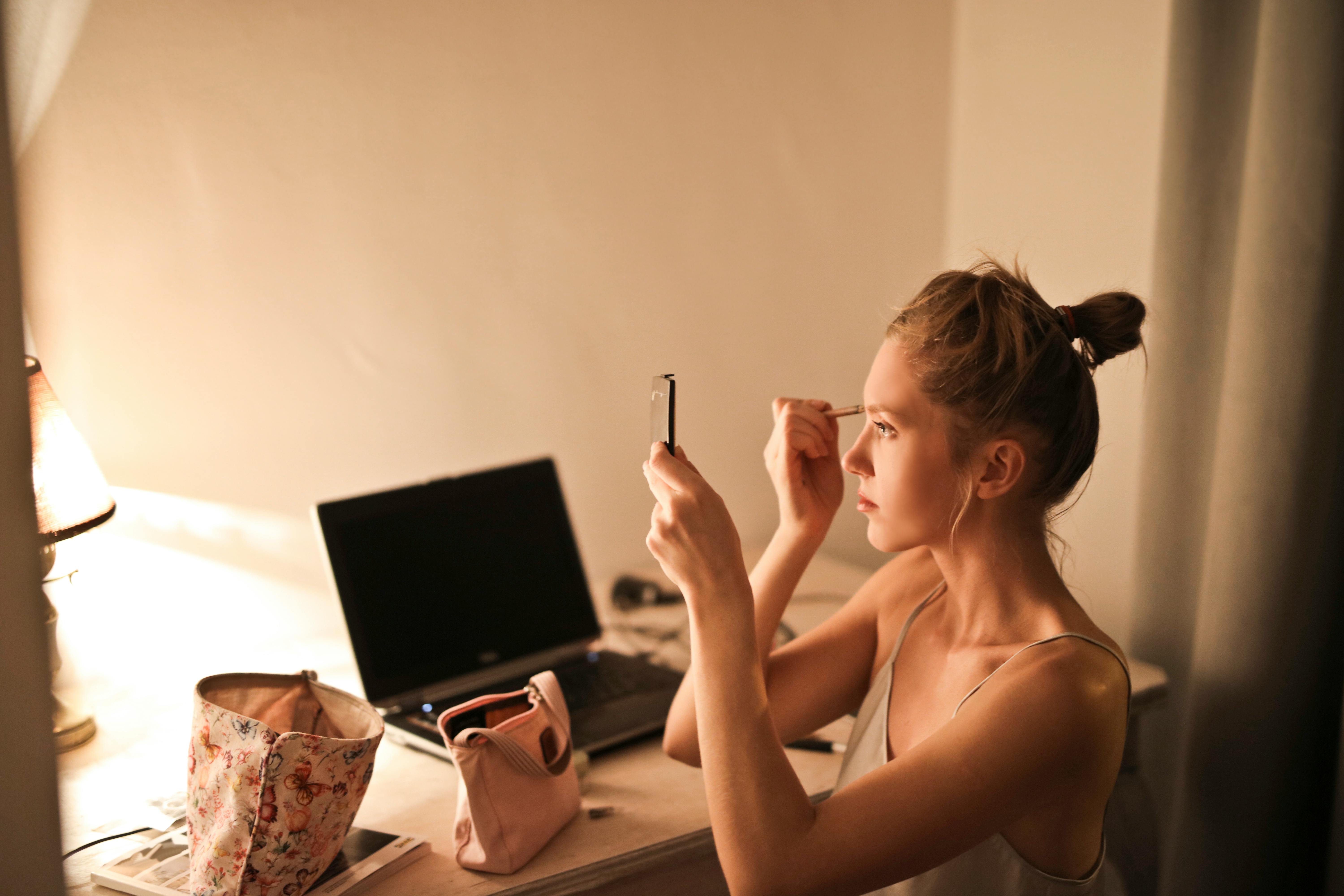
In the world of cosmetics, ** 92% of consumers** consult customer reviews before buying a beauty product online. Surprising? Not really when you know that applying a cream to your face or testing a new serum requires a considerable amount of confidence.
The cosmetics sector is experiencing a silent revolution. Gone are the days when brands dictated beauty trends alone. Today, consumers are taking back the power, armed with their smartphones and their quest for authenticity. Between the enticing marketing promises and the reality of the product in the bathroom, customer reviews have become the bridge of truth.
This transformation affects all channels: from e-commerce to platforms like Google My Business, including social networks. The stakes are colossal. On the one hand, consumers are looking for transparency for their well-being and health. On the other hand, brands must navigate digital reputation, DGCCRF compliance, and effective SEO strategies.
**Social proof** has never been more decisive in the purchase decision. An authentic testimony about the effectiveness of anti-aging can change thousands of sales, while a poorly managed negative review can tarnish years of carefully orchestrated marketing.
In this article, you'll discover why customer reviews are radically transforming the influence and credibility of cosmetic brands. We will explore how this digital revolution is redrawing the codes of online sales, and above all, how it allows consumers to make informed choices in their quest for beauty. Ready to dive behind the scenes of this change?
The impact of customer reviews on trust and credibility
In the current cosmetic ecosystem, **trust can no longer be decreed, it can be earned**. Every morning, millions of consumers scan their mirrors hoping that the new anti-aging serum will live up to its promises. This quest for beauty is accompanied by a growing distrust of traditional marketing discourses. Result? Customer reviews have become the new holy grail of credibility. A recent study reveals that 88% of consumers now trust online reviews as much as they trust personal recommendations from loved ones. In this context, cosmetic brands that neglect this reality risk seeing their reputation crumble as quickly as a poorly fixed foundation. Transparency is no longer an option, it has become the prerequisite for survival in a market where every beauty product must prove its value even before being tested.
How testimonials build consumer trust
Today, the authenticity of a customer testimonial represents a powerful commercial force. When Sandrine, 34, shares on Google My Business that this brand's vitamin C serum has “transformed her beauty routine in three weeks,” she is potentially influencing hundreds of shoppers. This **social proof** works according to a simple psychological mechanism: we prefer to follow the behaviors of people who are similar to us rather than trusting advertising promises.
Customer stories provide three crucial elements that traditional marketing cannot replicate. First, credibility through lived experience: a detailed opinion on the effectiveness of a concealer describes tangible results, with details that only a real user can provide. Second, the diversity of profiles: consumers discover how the same product reacts on different skin types, ages and problems. Finally, the honesty of negative feedback: paradoxically, a few well-managed critical reviews reinforce overall trust by showing that testimonies are not filtered.
The most successful cosmetic brands understood this dynamic. They actively encourage their happy customers to share their experience, whether through post-purchase email campaigns or SMS reminders. This proactive approach allows them to Multiply by 3 to 5 their volume of authentic reviews, creating a virtuous circle where each new testimonial attracts new customers. The techniques for effectively soliciting this feedback are detailed in our guide on [how to ask for customer reviews] (https://www.review-collect.com/blog/comment-demander-des-avis-clients-en-2025), which presents best practices adapted to the beauty sector.
The importance of transparency in a competitive market
Transparency in cosmetics is no longer limited to displaying the INCI list on the packaging. It now includes a global approach where customer reviews play a central role. In a sector where “revolutionary anti-aging” promises are multiplying, consumers are looking for tangible evidence. Brands that agree to publish all their reviews - positive as well as negative - demonstrate a confidence in their product that goes beyond simple commercial speech.
This transparent approach generates concrete benefits for cosmetic brands. In terms of SEO, product pages enriched with authentic reviews naturally rise up in Google results thanks to their unique and regularly updated content. In e-commerce, product sheets with testimonials have 270% higher conversion rates than pages without reviews. More subtle but just as important: the transparent management of negative feedback allows brands to quickly identify defects in their products and improve their formulation.
The fatal mistake would be to fall into the trap of over-curating reviews. Some brands, for fear of criticism, only publish 5-star testimonials. This strategy invariably backfires: consumers, accustomed to seeing mixed reviews, become wary of suspicious perfection. The most credible brands maintain an average rating between 4.2 and 4.7 stars - high enough to be reassuring, but with enough nuances to appear authentic. When a negative review appears, brand reaction becomes crucial: a professional, empathetic and solution-oriented response often turns a detractor into an ambassador. This proactive management of online reputation also requires specialized tools to automate monitoring and optimize responses, especially when the volume of reviews increases significantly.
SEO optimization and online visibility thanks to reviews
Beyond their impact on consumer trust, customer reviews have become a real catalyst for the natural referencing of cosmetic brands. This reality is shaking up traditional SEO codes, where product pages enriched with authentic reviews now outperform their “silent” counterparts in Google results. For beauty brands, this evolution represents a major strategic opportunity: to transform each customer testimonial into an organic visibility lever.
In a sector where competition to attract the attention of consumers is fierce, mastering this SEO dimension of reviews becomes decisive. The challenges go beyond simply improving the ranking: it is a question of creating a virtuous digital ecosystem where each new testimony reinforces the competitive position of the brand. A strategy that requires a detailed understanding of the mechanisms by which Google values this user-generated content.
The influence of reviews on search engine rankings
Google considers customer reviews to be unique and fresh content, two fundamental criteria for its ranking algorithm. Each new testimonial added to a product sheet automatically enriches the content of the page with natural keywords and phrases that consumers actually use. This semantic dimension is particularly powerful in cosmetics: when Julie writes that “this mascara really lasts all day without crumbling”, she generates long-tail content that the Google algorithm naturally associates with specific queries such as “long-lasting mascara” or “mascara without transfer”.
The figures confirm this marketing-SEO correlation. A study conducted on 500 beauty e-retailers reveals that product pages with more than 15 recent reviews (less than 6 months) get an average of 35% more organic traffic compared to pages without testimonials. Even more revealing: these pages get 2.3 times more clicks on queries that contain purchase intent terms (“buy,” “price,” “review”) - exactly the type of traffic that converts the best. Google naturally favors content that meets user search intent, and reviews provide exactly those authentic answers that future shoppers are looking for.
The frequency of new reviews also plays a crucial role in the algorithm. Google values regularly updated content, and a steady stream of customer stories signals healthy business activity. Cosmetic brands that collect 8 to 12 new reviews per month per product see their product sheets rise naturally in the search results. This dynamic can be optimized thanks to [best practices for receiving more customer reviews] (https://www.review-collect.com/blog/les-bonnes-pratiques-pour-recevoir-plus-davis-clients), which maintain this flow that is essential to SEO performance. The trick is to program targeted post-purchase solicitation campaigns: 48 hours after delivery for makeup products, 15 days for facial treatments requiring an effectiveness test.
Rich snippets and featured snippets: maximizing your SERP presence
Customer reviews are a gold mine to enrich the Google display of your cosmetic products thanks to structured data. When a brand correctly integrates Schema.org markup on its product pages, Google can display the famous “rich snippets”: those gold stars, average ratings, and review snippets that immediately catch the eye in search results. For an anti-aging cream, these visual elements can double the click rate compared to a traditional result, giving a decisive competitive advantage.
The strategy becomes even more profitable by targeting Featured Snippets thanks to frequently asked questions in reviews. When 20 customers ask in their testimonies “Is this foundation suitable for oily skin?” , this reveals a strong research intention. The smartest brands transform these recurring questions into FAQ sections on their product sheets, thus positioning themselves on voice queries and conversational searches. Google rewards this approach by often selecting these businesses for direct answers in position zero.
Technical optimization is only part of the equation. The real difference is in the quality and diversity of the testimonies collected. Detailed reviews, mentioning specific product characteristics (“I have sensitive skin and this cream did not cause any irritation”) carry more SEO weight than simple “Very good, I recommend”. This semantic richness allows Google to better understand the context of use of the product and to improve its ranking on specific queries. **The mistake to avoid absolutely: neglecting to respond to reviews**, because Google also considers brand-customer interactions as a signal of quality and engagement.
Continuous improvement of products thanks to customer feedback
While customer reviews transform your SEO visibility and strengthen consumer trust, their real power lies in their ability to revolutionize your product development. This strategic dimension goes far beyond marketing considerations: each testimony becomes a source of business intelligence to refine formulations, packaging, and positioning. In the cosmetics industry, where continuous innovation is an imperative for survival, this customer-product feedback loop often determines who will dominate tomorrow's trends.
The beauty sector is experiencing an unprecedented acceleration in its development cycles. Where it used to take 18 months to adjust a formula, the most agile brands are now exploiting customer feedback to iterate in a few weeks. This **revolution in cosmetic agility** is based on a detailed analysis of consumer testimonies, transforming each constructive criticism into an opportunity for measurable improvement. For brands that master this art, the return on investment often exceeds 300% in terms of product innovation.
Identify the strengths and weaknesses of products
The analysis of customer reviews reveals patterns that are invisible in traditional marketing studies. When 40 consumers spontaneously mention that a concealer “fits poorly on the eyelids”, this indicates a specific formulation defect that laboratory tests had not detected. This granularity of information allows cosmetic brands to identify not only problems, but also their exact frequency and impact on overall satisfaction.
Leading brands are developing systems for automatically categorizing customer feedback by theme: texture, efficiency, packaging, application, outfit, etc. This structured approach transforms the feedback flow into an actionable product dashboard. For example, if negative mentions about the “too thick texture” of a cream represent 23% of reviews, this becomes a priority for reformulation. More subtle: the analysis of positive opinions reveals the differentiating attributes that should absolutely be preserved. When customers love the “unique velvety sensation” of a serum, this characteristic becomes an identity marker to be protected in any evolution of the product.
This customer intelligence also makes it possible to detect the differences between marketing promise and real perception. An anti-aging product sold to “reduce wrinkles in 7 days” but whose reviews mention results “visible after 3 weeks” reveals a positioning lag. These insights guide communication adjustments as well as product changes. The most successful R&D teams now consult these analyses before each new development, thus avoiding reproducing the defects identified by consumers on previous ranges.
Adjust formulations and marketing based on reviews
Transforming customer feedback into concrete innovations requires a structured process that directly connects marketing, R&D and production teams. The most agile cosmetic brands have established monthly “Voice of Customer” committees where each recurring critic is subject to a technical evaluation. This systematic approach makes it possible to distinguish formulation problems (solvable by R&D) from usage problems (addressable through customer education) and positioning problems (relating to marketing).
The most striking example concerns the adaptation of textures according to geographical feedback. A French brand may discover that its moisturizer, popular in Europe, is receiving criticism for its “heaviness” from Asian consumers used to lighter textures. These geolocated insights make it possible to adapt formulas by region while maintaining the effectiveness of the product. More precisely, the temporal analysis of reviews reveals seasonal variations: a foundation can be criticized in summer for its durability on oily skin, guiding the development of a “long-lasting” version at the same time.
This continuous improvement process is also transforming launch strategies. Instead of relying on expensive advertising campaigns, some brands now favor iterative launches based on customer feedback. They release a first version of the product, collect massive reviews, quickly adjust the wording, and then communicate on these improvements. Paradoxically, this transparency reinforces trust: consumers appreciate brands that listen and adapt rather than those that claim to be perfect on the first try. The [intelligent management of customer reviews] tools (https://www.review-collect.com/blog/les-bonnes-pratiques-pour-recevoir-plus-davis-clients) then become strategic to automate this collection of feedback and quickly identify emerging trends, allowing brands to stay ahead of the expectations of their market.
Conclusion
In the cosmetic world of 2025, customer reviews are no longer a marketing “plus”, but the very foundation of credibility and commercial performance. This profound transformation is redefining the rules of the game: brands that master the art of collecting, managing and valuing authentic testimonies are taking a decisive step ahead of their competitors.
The numbers speak for themselves: ** 92% of consumers consult reviews before purchasing**, pages enriched with testimonials record 270% more conversions, and Google values this fresh content to naturally improve SEO. Even more, each customer feedback becomes a gold mine of product intelligence that allows you to iterate quickly and stay in line with market expectations.
The key to success lies in a comprehensive strategic approach: collecting massively and intelligently, responding to criticism with empathy, turning every feedback into an opportunity for improvement, and using this wealth of content to strengthen your SEO presence. Cosmetic brands that neglect this dimension are exposed to seeing their more agile competitors conquer their market shares. To effectively automate this collection of reviews and maximize their business impact, Review & Collect supports cosmetic brands in this digital transformation, transforming each customer interaction into a measurable growth driver.
FAQS
How many opinions do you need to have to be credible in cosmetics?
For optimal credibility, aim for at least 15 recent reviews per cosmetic product. Studies show that under 10 reviews, consumers remain suspicious, while above 50 reviews with a score between 4.2 and 4.7 stars, trust reaches its peak. The important thing is not only quantity but also freshness: regular reviews (8-12 per month) signal healthy activity.
How to react to a negative opinion on a cosmetic product?
Respond within 24 hours with empathy and professionalism. Thank the customer for their return, offer a concrete solution (refund, exchange, advice of use) and invite them to contact you in private. Avoid lengthy technical justifications in public. A well-managed response often turns a detractor into an ambassador and reassures future buyers about your customer service.
Can fake reviews really harm my cosmetic brand?
Absolutely. Google and platforms are better and better at detecting fictional reviews, with severe penalties as a result (de-referencing, deleting reviews). Even worse, consumers easily identify suspicious patterns (an avalanche of identical 5-star reviews, empty profiles). Always focus on authenticity: a few real mixed reviews paradoxically reinforce overall credibility.
What is the best time to ask for an opinion on a cosmetic product?
Timing varies depending on the type of product. For makeup: request 48 hours after delivery (immediate use). For facial treatments: wait 15 days for the effectiveness to be noticeable. For anti-aging: wait 3-4 weeks. The ideal is to send a first quick satisfaction email, then a second targeted “results” email at the optimal timing according to the category.
How do I integrate customer reviews into my cosmetic SEO strategy?
Reviews automatically generate fresh content with natural keywords (“long-lasting mascara”, “sensitive skin cream”). Use Schema.org markup to display stars in Google, create FAQ pages with recurring review questions, and use detailed testimonials to fuel your featured snippets. Each new review reinforces your thematic authority in the eyes of Google.
Can I legally encourage my customers to leave positive reviews?
According to the DGCCRF, you can ask for opinions but not influence their content. Forbidden: offer rewards only for positive reviews, hide negative reviews, or write false testimonials. Authorized: send neutral reminders, offer small benefits for any honest opinion (positive or negative), and facilitate the deposit process. Transparency is still your best legal protection.
Should we respond to all customer reviews or only to the negative ones?
Respond systematically to negative and neutral reviews. For positive reviews, one answer out of two or three is sufficient, varying the formulas to avoid automation. Give priority to responses to detailed reviews that mention specific benefits - this enriches the content of the product page. A brand that engages in dialogue with its customers inspires more trust than a silent brand.
Frequently asked questions
💡 Ready to optimize your Google reviews?
Learn how Review Collect can help you reach 4.9/5 stars in 30 days.
📧 Free e-reputation checklist
Receive our complete checklist to optimize your e-reputation in 15 days.
Recommended articles in Review Platforms
Your 4.2-Star Rating Is Not Telling You Why Customers Leave
A well-answered negative review beats a 5-star rating

The 8 Best Review Management Software Platforms for E-Commerce in 2026
Review Collect
The e-reputation solution that turns your customers into ambassadors. Automated collection of multi-channel customer reviews.


