



The importance of customer reviews in 2025 in the restaurant sector
.jpeg)


.svg)
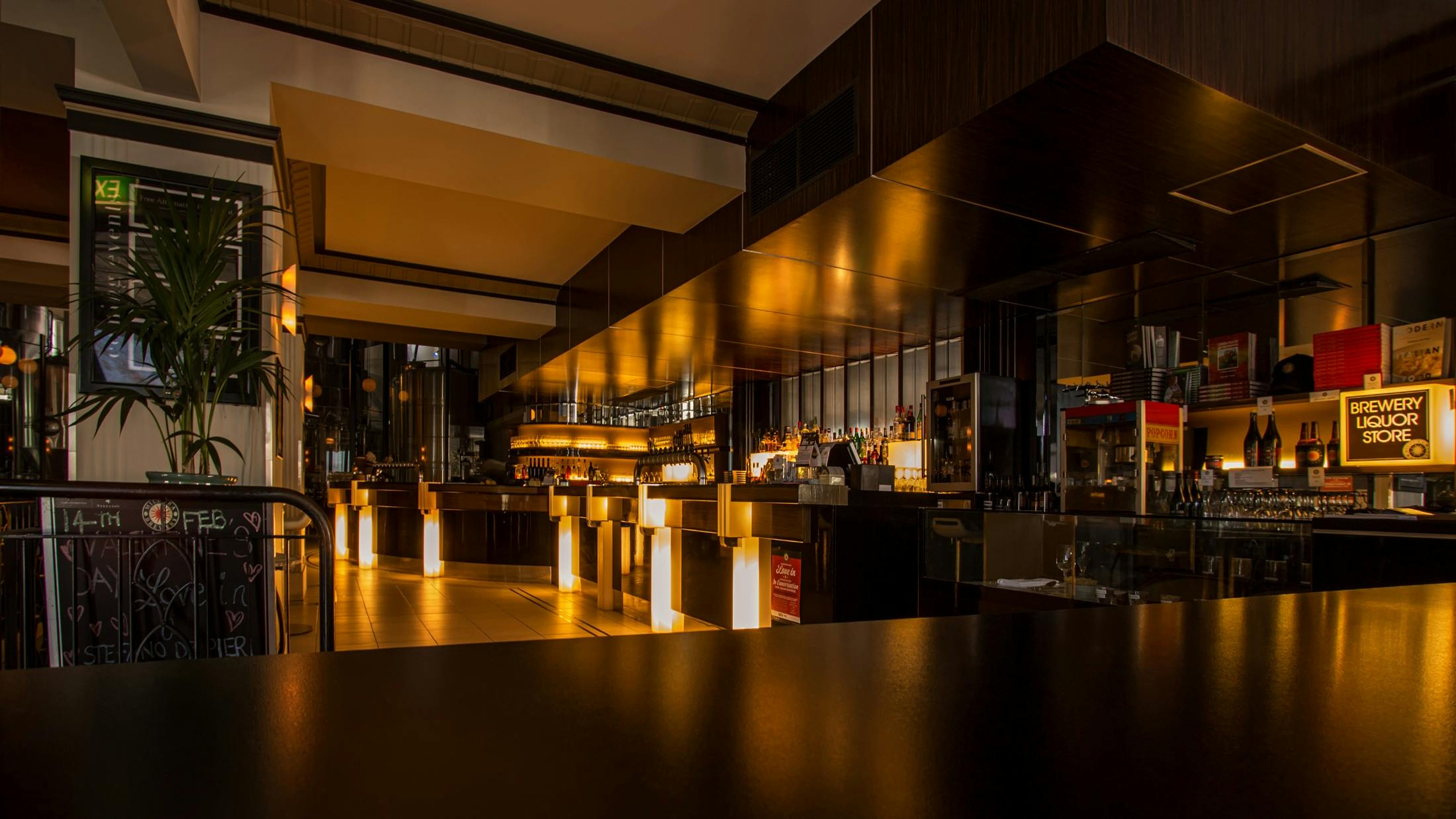
93% of consumers check online reviews before choosing a restaurant — and this statistic takes on an even more critical dimension in 2025. At a time when Google is massively integrating artificial intelligence into its search results and where user-generated content (UGC) directly influences purchasing decisions, ignoring the management of its digital reputation is like letting its competitors capture a customer base that is yet within reach.
The restaurant industry is going through a silent revolution. Between the explosion of delivery, the rise of social networks and the emergence of new post-Covid behaviors, restaurant owners are facing completely renewed customer experience challenges. Les customer reviews are no longer simple returns: they are now the fuel for a modern marketing strategy, capable of propelling an establishment towards success... or driving it into anonymity.
In this article, you will discover the trends that are redefining the relationship between customer reviews and sales performance in 2025. We will analyze how new technologies are transforming the collection and exploitation of customer feedback, what strategies are adopting by successful restaurants, and above all: how to transform each review — positive as well as negative — into a concrete driver of growth.
Whether you are an independent restaurant owner or the head of a chain, these insights will give you the keys to making your customer reviews a real competitive advantage in a market that is more competitive than ever.
Why customer reviews are crucial in 2025
In a restaurant sector that has more than 179,000 restaurants in France, standing out is an obstacle course. However, a trend is radically transforming the situation: 88% of French people consume meals away from home, and their selection process now relies heavily on the feedback of other guests. This behavioral evolution is completely redefining the rules of the competitive game. Restaurant owners who have understood this are no longer content with having a nice map or a great location — they are methodically orchestrating their digital reputation. Because yes, in 2025, ignoring this reality is equivalent to letting your competitors capture a clientele that is nevertheless accessible, simply because they have better control of this new tool of influence.
The influence of online reviews on restaurant choices
The numbers speak for themselves: 70% of French consumers consult online reviews before pushing the door of a restaurant. But what is more striking is the way in which this consultation has become sophisticated. Gone are the days when a simple look at the stars was enough — today's diners dissect reviews, analyze photos shared by other customers, and pay particular attention to the restaurant owner's responses to negative reviews.
This evolution is explained by a powerful psychological phenomenon: social proof. When 33% of diners read reviews specifically before their first visit, they're looking to reduce the risk of a disappointing experience. A restaurant owner from Lyon recently told us that he saw his bookings increase by 40% after systematically encouraging his satisfied customers to share their experience on Google. His strategy? Offer free coffee the next time you visit after leaving a review — an approach that respects the platforms' guidelines while organically stimulating positive feedback.
The phenomenon is amplifying with the digitization of reservations: around 1 in 2 French people now book their table online. These booking platforms automatically aggregate reviews, creating a digital showcase where each comment becomes a selling point or a deterrent. In fact, customer-generated content — food photos, geotagged Instagram stories, detailed reviews — generates 28% more engagement than traditional restaurant marketing posts. This authenticity particularly resonates with customers who now place 92% more trust in the recommendations of other consumers than in traditional advertising.
E-reputation: a window as important as the facade
Imagine two restaurants side by side on the same street. The first has a score of 4.2/5 with 150 recent reviews and thoughtful responses from the chef. The second, although equipped with an equivalent kitchen, tops out at 3.1/5 with only 12 reviews dating back several months. Which would you choose? This situation, far from being fictional, perfectly illustrates why e-reputation has become a business pillar as strategic as the location or the quality of the dishes.
The 78% of restaurant businesses who actively use Facebook, Instagram and their website to manage their reputation have understood this well: their digital presence works like a 24-hour window. Unlike the physical facade visible only to passers-by, this digital window shines out over a much larger territory. A great review on TripAdvisor can attract a visiting tourist, while a series of rave reviews on Google Maps directly influences searches for "restaurant near me."
The fatal error consists in neglecting this dimension or, worse, in undergoing it passively. Take the example of a pizzeria in Marseille that was completely unaware of its online presence until discovering that a dissatisfied former employee had left several false negative reviews, causing its average rating to drop and visibly impacting its attendance. The owner then implemented a structured strategy: systematic encouragement of satisfied customers, professional response to each comment, and above all, transformation of each constructive criticism into concrete improvement. Result: in six months, not only was the score up, but the pizzeria had become a local reference, with a waiting list on weekends.
This proactive approach to e-reputation reveals an aspect that is often underestimated: each satisfied customer can become an authentic ambassador for your establishment. Review management tools now make it possible to systematize this transformation, by identifying the optimal times to seek feedback and by facilitating the publication process. To deepen these collection strategies, our best practice guide for getting more customer reviews details the most effective techniques according to your type of establishment.
How to use positive reviews to boost your restaurant
Understanding the importance of reviews is one thing. Knowing how to transform them into a real engine of growth is another. If 70% of consumers read reviews before choosing a restaurant, it means that a positive review literally becomes your best salesperson — available 24 hours a day, credible in the eyes of prospects, and completely free. The difference between the restaurant owners who suffer from their digital reputation and those who manage it lies precisely in this ability to transform each positive customer feedback into an acquisition lever.
However, 78% of restaurants certainly have a digital presence, but how many are really exploiting the potential of their satisfied reviews? Between passively collecting a few comments and orchestrating a systematic strategy of amplification, the difference in results is considerable. This section shows you how to go from being a spectator to being an actor in your own digital success.
Positive reviews: a growth driver to be exploited
A 5-star review isn't just a compliment — it's an authentic recommendation that directly influences the buying decisions of dozens of potential prospects. Think about it: when a customer writes "Great service, great food, great atmosphere," they're translating exactly what you sometimes struggle to communicate in your marketing materials. This authenticity explains why customer-generated content generates 28% more engagement than your traditional posts.
The winning strategy is to create an ecosystem where your positive reviews work for you on multiple fronts. First, optimize their visibility: a Bordeaux restaurant owner that we supported now displays his best Google reviews directly on his window via a connected screen. Result? A 25% increase in the conversion rate of passers-by into customers. At the same time, republishing these testimonies on your social networks (with the tacit agreement of the customer) amplifies their reach. The trick: create attractive visuals featuring the review with a photo of the dish in question.
Even more strategic, turn your positive reviews into SEO content. Every happy customer feedback can feed into your website: create a dynamic testimonials section, embed review snippets into your menu pages, or write blog posts like "What our favorite customers order." This approach has a double advantage: it enriches your site with fresh and authentic content, while boosting your local SEO thanks to the keywords naturally used by your customers.
Tips to encourage customers to leave reviews
Collecting reviews should leave nothing to chance. Timing is the key factor: ask for feedback right after the positive experience, when the emotion is still high. Concretely, train your team to identify the optimal moment — in general, right after serving the main course or at the time of the bill if everything went well. A simple sentence like "Did you enjoy your experience? Do not hesitate to share it on Google, it helps us a lot!" is often enough.
Make the process as easy as possible. Create custom QR codes that point directly to your Google Business or TripAdvisor page and place them strategically: on the table, on the back of the bill, or even on a small, elegant easel. The mistake to avoid? Multiply the platforms in your request — focus on Google first, then possibly on a second platform depending on your clientele (TripAdvisor for tourist areas, TheFork if you are referenced there).
Innovate in the approach: some restaurateurs offer a digestive or a coffee during the next visit after an opinion left — a method that perfectly respects the platforms' guidelines since the reward is not immediate. Others create personalized business cards from the chef with a handwritten message thanking you for coming, accompanied by a discreet QR code. This personalization strengthens the emotional bond and naturally increases the desire to recommend.
Beware of the classic pitfalls: never solicit only your most satisfied customers (this would create a detectable artificial bias), never offer an advantage in exchange for a 5-star review specifically (this is forbidden), and above all, always respond to reviews received — even positive ones. A personalized response such as "Thank you Madame Martin, we are delighted that our risotto with porcini mushrooms won you over!" Show your attention and encourage other customers to share their experiences. To learn more about these respectful and effective incentive techniques, check out our A practical guide to encourage your customers to leave reviews, which details the best approaches for your type of establishment.
Managing Negative Reviews Effectively: Turning Criticism into Opportunities
Collecting and amplifying positive reviews is only one facet of your online reputation strategy. Because yes, **negative reviews are unavoidable** — even the best restaurants get them. The fundamental difference between establishments that prosper and those that fail lies precisely in their ability to transform these criticisms into real levers for improvement and loyalty.
Contrary to popular belief, a well-managed negative review can strengthen your credibility more effectively than a series of 5-star reviews. Consumers in 2025 are used to contrasting returns and are looking for authenticity: a perfect score without any criticism paradoxically awakens their distrust. The strategic challenge is therefore to master this delicate art of reputation crisis management, by transforming each dissatisfaction expressed into a concrete demonstration of your professionalism and your ability to listen to customers.
The golden rules for responding to negative reviews
The response to a negative review is based on a specific mechanism where every word counts. First unchangeable rule: **respond within 24 hours maximum**. This speed of reaction sends a strong signal both to the dissatisfied customer and to future readers of the review. It shows that you take every feedback seriously and that your customer service never sleeps. A Parisian restaurant owner recently told us that he had saved three group bookings simply by responding in less than two hours to a criticism concerning a service incident — future customers having appreciated his responsiveness and his sincere apologies.
Then, systematically adopt the AIMER structure: Empathic acknowledgement of receipt, Factual investigation, Corrective measures, Proposed private exchange, Reaffirmation of your values. In concrete terms, always start by thanking the customer for taking the time to share their experience, even a negative one. This approach may seem counterintuitive, but it deters aggression and shows your professional maturity. Continue by acknowledging the objective facts without getting into controversy: "We understand your disappointment with waiting 25 minutes for your main course" rather than "It was very busy that night." This subtle difference reveals your ability to take responsibility without looking for excuses.
The corrective phase is the core of your response. Precisely detail the actions put in place to avoid the repetition of the problem: reinforced team training, modification of the ordering process, improvement of communication in the room. This transparency turns your response into a window for your continuous improvement. Always finish by inviting the customer to get back in touch privately — by phone, email or direct message. This approach accomplishes a twofold objective: it takes the conversation out of the public domain while demonstrating your genuine desire to resolve.
Beware of the classic pitfalls that can turn the situation against you. Never over-justify yourself, don't question the customer's version (even if it seems exaggerated), and above all, never respond emotionally. A restaurant owner from Lyon saw his reputation plummet after responding aggressively to a critical review, triggering a series of negative comments in reaction to his own response. The art of responding to negative reviews requires that emotional discipline that sets true professionals apart.
The essential platforms to watch in 2025
Your monitoring strategy can no longer be satisfied with Google and TripAdvisor. The review ecosystem has become complex and diversified, requiring savvy restaurant owners to orchestrate sophisticated multi-platform monitoring. Google Business Profile obviously remains central — 70% of restaurant searches go through this interface. But the emergence of sectoral platforms and the integration of opinions into the social media ecosystem are redefining the situation.
TheFork (ex-LaFourchette) deserves special attention for restaurants offering online reservations. With 88% of French people who regularly consume away from home and around 1 in 2 who now book their table online, this platform directly influences your occupancy rate. TheFork reviews have the particularity of being geotagged and often accompanied by photos of food, creating particularly engaging user-generated content (UGC) — with 28% more engagement than your traditional marketing publications.
Don't forget social networks that now function as review platforms in disguise. Geotagged Instagram Stories, Facebook posts with mention of your establishment, comments on your LinkedIn publications... These "social" mentions often escape the surveillance of restaurant owners, although they directly impact your reputation. A dissatisfied customer who posts a negative story instantly reaches hundreds of followers. The solution? Set up Google alerts on the name of your restaurant, monitor your mentions on social networks, and create a response protocol adapted to each channel.
To orchestrate this multi-platform surveillance without devoting daily hours to it, the most seasoned restaurant owners now rely on integrated technological solutions. This approach allows them to centralize all customer feedback — positive and negative — and to respond consistently and quickly, regardless of where they come from. Because beyond simply managing reviews, it's about building a customer intelligence system that helps you anticipate trends, identify priority areas for improvement, and transform each interaction into a growth opportunity. To deepen these strategies for the overall management of your digital reputation, our A complete guide to online reputation provides you with the keys to master this entire complex but crucial ecosystem for your development.
Conclusion
In 2025, customer reviews represent much more than just a validation tool for restaurants: they are the central pillar of a modern marketing strategy. Between the explosion of user-generated content (UGC) and the growing integration of AI in search results, controlling your digital reputation is becoming as crucial as taking care of your kitchen or optimizing your location.
The equation is now clear: ** 93% of consumers consult reviews before choosing a restaurant **, and this trend is intensifying with new post-Covid habits and the accelerated digitalization of the sector. The establishments that are thriving today no longer suffer from their e-reputation — they orchestrate it methodically. From the strategic collection of positive reviews to the transformation of negative reviews into demonstrations of professionalism, every customer interaction becomes an opportunity to strengthen its competitive position.
The future belongs to restaurant owners who will be able to create an ecosystem of virtuous reviews: naturally encourage positive feedback, respond with empathy to discontent, and above all, transform each testimony into a lever for continuous improvement. This holistic approach to the customer experience, where reviews become a real business intelligence tool, will differentiate the leaders of tomorrow from establishments that are still struggling to understand the new rules of the game. To support you in this digital transformation and effectively automate the collection of your customer reviews, Review Collect offers a complete solution adapted to the specific challenges of catering in 2025.
Frequently asked questions
💡 Ready to optimize your Google reviews?
Learn how Review Collect can help you reach 4.9/5 stars in 30 days.
📧 Free e-reputation checklist
Receive our complete checklist to optimize your e-reputation in 15 days.
Recommended articles in Review Platforms
Your 4.2-Star Rating Is Not Telling You Why Customers Leave
A well-answered negative review beats a 5-star rating
The 8 Best Review Management Software Platforms for E-Commerce in 2026
Review Collect
The e-reputation solution that turns your customers into ambassadors. Automated collection of multi-channel customer reviews.


