

Omnichannel Review Collection: The Strategy That Multiplies Your Collection Rate by 20
Email alone delivers 2–3% review collection. Here's how an omnichannel strategy (WhatsApp + SMS + email + QR code) hits 40%, without over-soliciting your customers.
 Victor· Growth Hacker
TL;DR
- →Email alone caps at 2–3% collection. The Review Collect omnichannel sequence (WhatsApp + SMS + email + QR) reaches up to 40%.
- →Each channel has its moment: WhatsApp on day 2, SMS on day 5, email on day 7, QR code running in parallel.
- →The sequence stops automatically once a review is submitted. No double-solicitation.
- →Review Collect orchestrates the entire sequence automatically, no per-channel setup needed.
Your omnichannel strategy sells on 4 channels. Your review collection still runs on one: email. Result: 2 to 3% of your customers leave a review. The other 97 have an opinion about your brand. You just never heard it.
Merchants who apply the same omnichannel logic to review collection report rates above 40%. The difference has nothing to do with product or service. It comes down to channel orchestration.
What omnichannel changes for customer reviews
Omnichannel means coordinating all your channels to deliver a seamless customer journey. On the sales side, you're already doing it: your customer spots a product on Instagram, compares on your site, buys on mobile, picks up in-store. Every channel plays its role in a coherent sequence.
On the review collection side, most merchants do the opposite. One email, sent on day 3. If the customer doesn't open it (80% of cases), that's it. No follow-up on another channel. No WhatsApp message. No QR code in the package.
It's a strange asymmetry: you've invested in an omnichannel strategy to acquire and retain, yet you're leaving your social proof at a 3% collection rate.
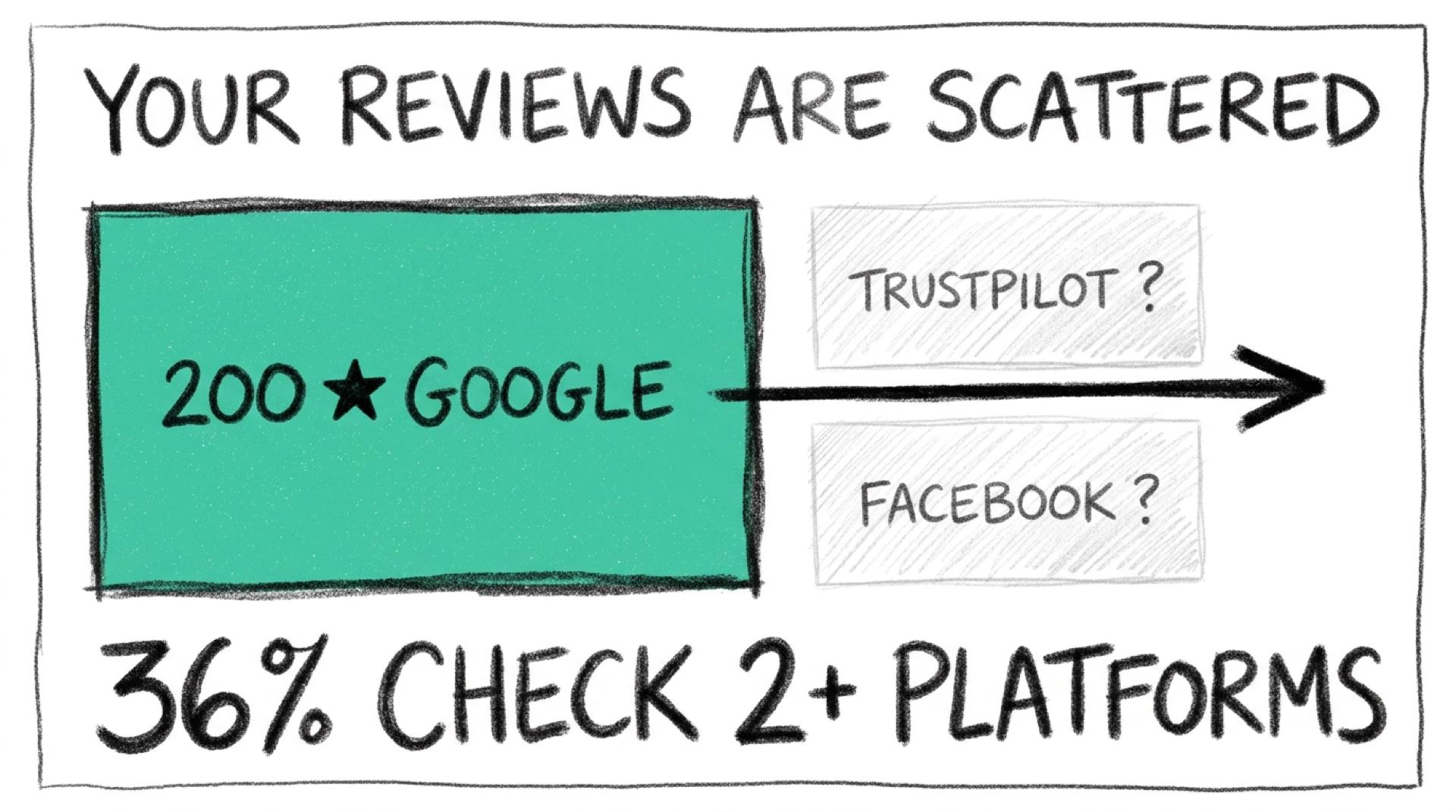
Why email alone caps at 2–3%
Email was the standard for review collection a decade ago. Today, inboxes are saturated. The average open rate for a post-purchase email sits between 18 and 22%. Of those opens, the click-through rate to the review link rarely exceeds 15%. The math is simple: out of 100 orders, you get 3 reviews.
It's not a copywriting problem. It's a channel problem. Email alone no longer cuts it as the sole review collection channel.
Three structural reasons explain this. Timing first: an email sent on day 3 often arrives before the customer has fully used the product. The experience is incomplete, satisfaction not yet formed. Then saturation: in the 5 days after an order, a merchant sends an average of 3 to 4 transactional emails (confirmation, shipping, delivery, satisfaction survey). The review email arrives at the end of the sequence, in an already-crowded inbox, after the customer's attention has been consumed by earlier messages. Finally, friction: clicking a link, writing text, sometimes authenticating on an external platform. That journey takes 4 to 6 minutes for an unmotivated customer. Most drop out halfway.
| Channel | Open rate | RC collection rate | Ideal context |
|---|---|---|---|
| Email only | 20% | 2–3% | Fallback, B2B customers or 35–50 age bracket |
| SMS | 98% | 8–12% | Delivery confirmations, follow-ups |
| 98% | 15–20% | Post-purchase day 2, customers with WA account | |
| QR code (packaging/store) | — | 5–10% | Physical retail, premium packaging |
| RC omnichannel sequence | — | up to 40% | Email + SMS + WhatsApp + QR orchestration |
According to an Ifop study (January 2026), 93% of consumers check reviews before buying. Your collection rate decides whether you exist in that moment.
The 4 channels of an omnichannel review strategy
Each channel has its moment, its segment, and its trigger method. Combining them multiplies your chances of reaching the right customer at the right time.
The baseline channel, essential but insufficient on its own. Works well for customers who open emails: B2B segments, high-value orders, the 35–50 age bracket. Send after confirmed delivery, not after shipping. Well-configured post-purchase email campaigns remain the safety net of any review strategy.
The optimal window sits between 48h and 72h after confirmed delivery. Never at shipping, rarely after day 5. This gives customers time to use the product without the initial enthusiasm fading. Subject line matters as much as content: a short subject mentioning the product or brand name gets 30–40% more opens than a generic one. The action button must point directly to the target review platform, no intermediate page. Every extra step cuts conversion.
Email remains essential even in a multichannel strategy because it works as a universal fallback: any customer with an email address can receive it, without a specific opt-in or installed app. That's its coverage advantage. This is why you activate it last in the sequence, not first: that's where it captures what the other channels missed.
SMS
98% open rate in under 3 minutes. Ideal for customers less active on email or for follow-ups. An SMS with a short direct link to the review page generates 4 to 5 times more responses than a standalone email. Constraint: SMS opt-in required (GDPR).
SMS works better as a follow-up than as an initial trigger. Sent to a customer who hasn't opened the email at day 3, it doubles the collection rate on that segment without creating over-solicitation. The customer already had one chance to ignore you. SMS offers a second channel, not a duplicate.
The main constraint is opt-in. This requirement is less restrictive than it sounds: most buyers provide a valid phone number at checkout. It's not a segment to build. It's a base you already have. Customers without a registered number go straight to email, with no gap in the sequence.
The channel that shifts the numbers. 98% open rate, conversational format, clickable link directly in the chat thread. A review request sent via WhatsApp 48h after package receipt gets the best response rates. Review Collect sends it natively, no third-party API, no complex setup.
WhatsApp's advantage lies in the reception context. Your customer receives your request in the same space as their personal conversations, not in a professional inbox. This lowers the attention threshold: reading a WhatsApp message takes 20 seconds, the review link is right in the thread, one tap is enough. No subject to open, no extra browser window. That's where the collection rate gap opens up compared to email.
A practical timing rule: customers see WhatsApp as a personal channel. Messages before 9am or after 8pm generate more irritation than responses. Schedule sends between 10am and 7pm. Friday evenings and Saturday mornings are the least effective slots. Tuesday and Thursday midday remain the best-performing windows.
QR code
The physical channel, often overlooked. Printed on packaging, inside the parcel, on receipts, or in-store, it captures customers who never respond to digital channels but who, product in hand, are ready to share their experience. Particularly effective for D2C brands and physical retail.
On packaging, the QR code triggers at a moment of positive emotion: unboxing. That's usually the customer's peak enthusiasm, well before daily use dulls the first impression. In-store or on receipts, it captures a segment digital channels never reach: customers who won't read your email, won't open your SMS, but who, product in hand, are ready to share their experience in 30 seconds.
Use dynamic QR codes instead of static ones. A dynamic QR lets you change the destination URL without reprinting packaging: you can pivot from Google to Trustpilot based on your priorities, test different landing pages, or redirect to a campaign-specific platform. Review Collect generates and manages these QR codes directly from your dashboard, no third-party tool required.
Orchestration: what order, who, which channel
Omnichannel collection isn't about sending everything to everyone at once. Orchestration means activating the right channel first, following up on another if needed, and stopping the moment the customer responds.
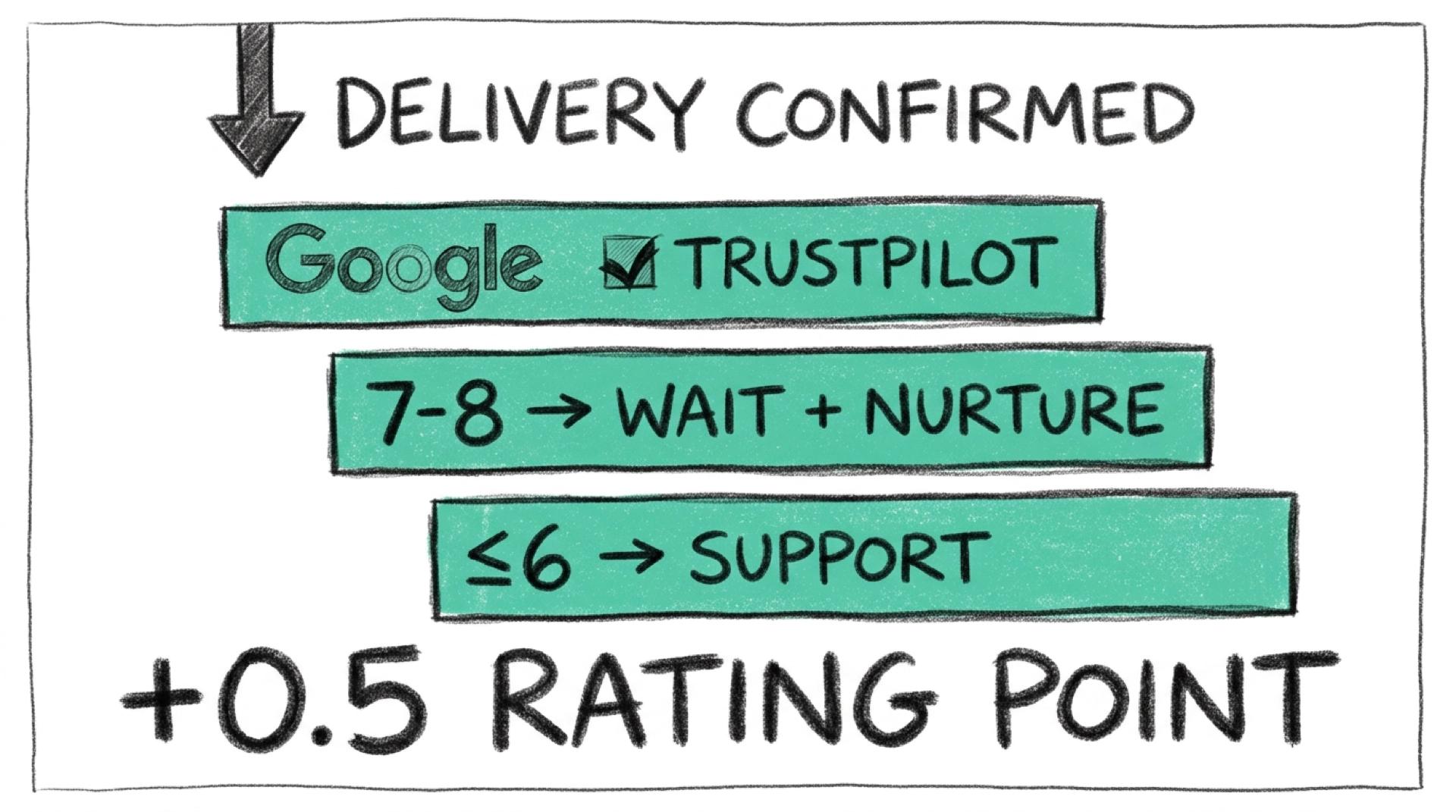
| Step | Timing | Channel | Activation condition |
|---|---|---|---|
| 1 | Day 2 after delivery | Customer has WA number + opt-in | |
| 2 | Day 5 | SMS | No response at step 1 + SMS opt-in |
| 3 | Day 7 | No response at steps 1 and 2 | |
| 4 | Ongoing | QR code (packaging) | All customers, running in parallel |
Three rules to keep the sequence effective without becoming intrusive:
Don't send on multiple channels simultaneously. Omnichannel is built as a sequence, not a blast.
Stop at response. If the customer left a review via WhatsApp, no SMS or email goes out. The sequence closes automatically.
Segment by available channel. A customer without a phone number goes straight to email. No forcing.
Review Collect customers who activate the full sequence: up to 39% response rate over the last 30 days.
Omnichannel review collection for e-commerce
Email, SMS, WhatsApp and QR code in a single automated sequence.
- ×30 reviews in 30 days from the first month
- Connect Shopify, WooCommerce, PrestaShop in 48h
- Reviews sent to Google, Trustpilot, Verified Reviews
The metrics to track your omnichannel review strategy
Activating omnichannel collection isn't enough. To optimize it over time, three metrics matter. Collection rate by channel first: if WhatsApp generates 18% responses but your SMS sits at 2%, the problem is in the timing or the message, not the channel. Average time between trigger and published review next: a long delay reveals friction in the journey (review page too long, authentication required, link redirecting to the wrong platform). Distribution of ratings by platform finally: if your Google reviews are excellent but your Trustpilot reviews average, your routing doesn't match the specific expectations of each audience.
An imbalance between channels is always a signal. It points to a segment problem (you're sending WhatsApp to customers without a valid number), a timing problem (your SMS arrives at the wrong moment), or a message problem (the email doesn't create enough urgency for the B2B segment). Adjust one parameter at a time and measure the effect over 30 days before changing anything else.
Review monthly for the first 90 days, then switch to quarterly once the sequence stabilizes. This isn't a set-and-forget setup. Every wave of orders refines it.
How Review Collect automates your review requests
Review Collect connects your review collection channels in a single automated sequence. Connect Shopify, WooCommerce, or PrestaShop once. Every order then triggers the sequence adapted to that customer's profile: WhatsApp if available, SMS as follow-up, email as fallback.
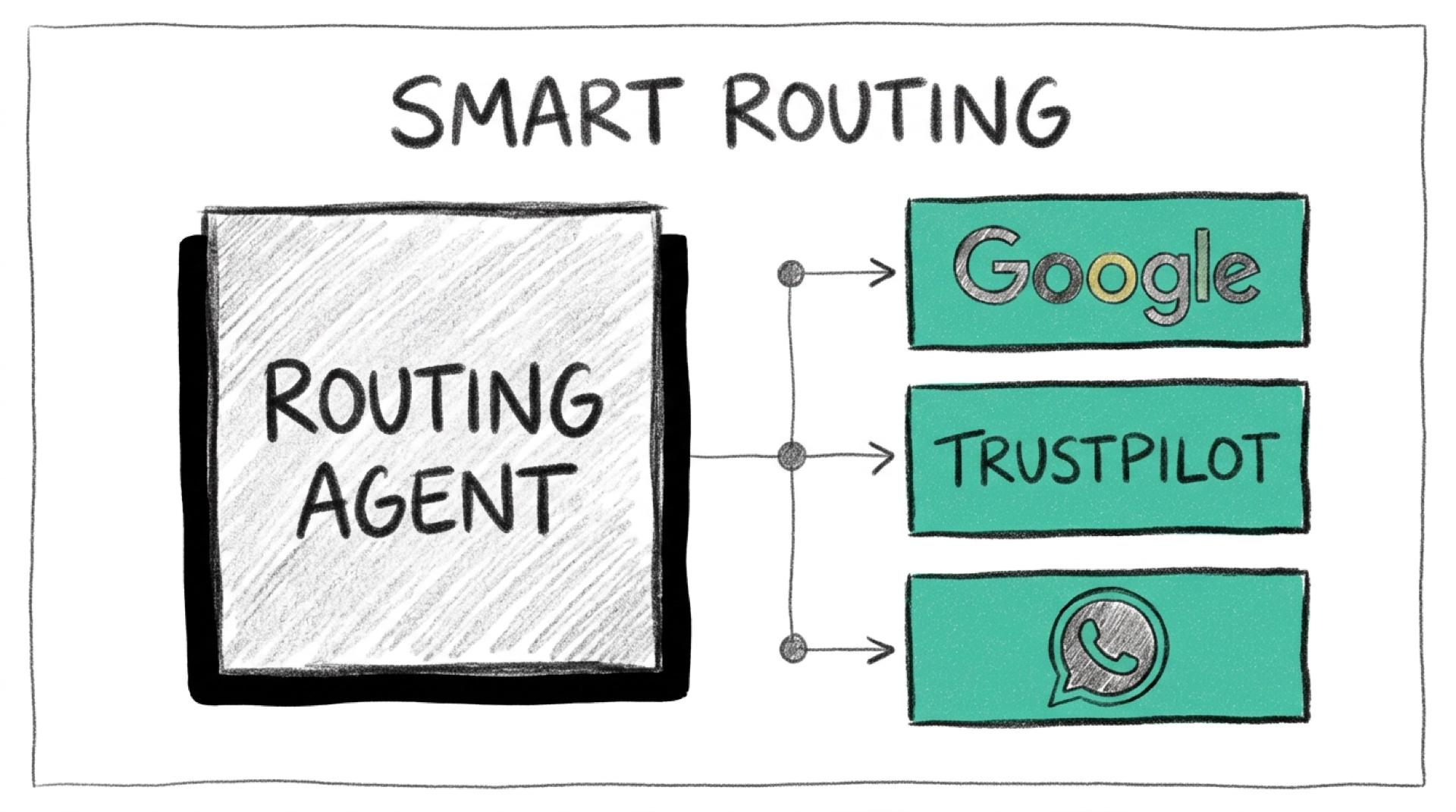
No channel-by-channel configuration. No WhatsApp Business account to manage separately. No SMS template to code. You're live in 48 hours, no developer needed.
Collected reviews go directly to Google, Trustpilot, and Verified Reviews, on the platforms you choose. Review Collect handles the routing, you keep control.
Frequently Asked Questions
Analyze with AI
Ask your questions about "Omnichannel Review Collection: The Strategy That Multiplies Your Collection Rate by 20" with your preferred AI
Growth Hacker
Related articles
RCS for customer review collection: what changes in 2026
Aug 10, 2026
B2B and SaaS Customer Reviews: Why They're Harder to Collect (and How to Automate Them)
Aug 3, 2026
Social Proof Marketing: Definition, Types, and How Customer Reviews Make It Work
Jul 23, 2026