
Customer loyalty: why your reviews drive repeat purchases (×2)
Retaining a customer costs 7× less than acquiring one. The most underused lever is not a loyalty program — it is replying to your customer reviews.
 Victor· Growth Hacker
Contents
- Customer loyalty: definition and key metrics for 2026
- The direct link between customer reviews and retention
- 4 review-based customer loyalty strategies
- Customer retention rate: how to calculate and improve it
- Mistakes that kill e-commerce retention
- How Review Collect turns your reviews into a retention engine
TL;DR
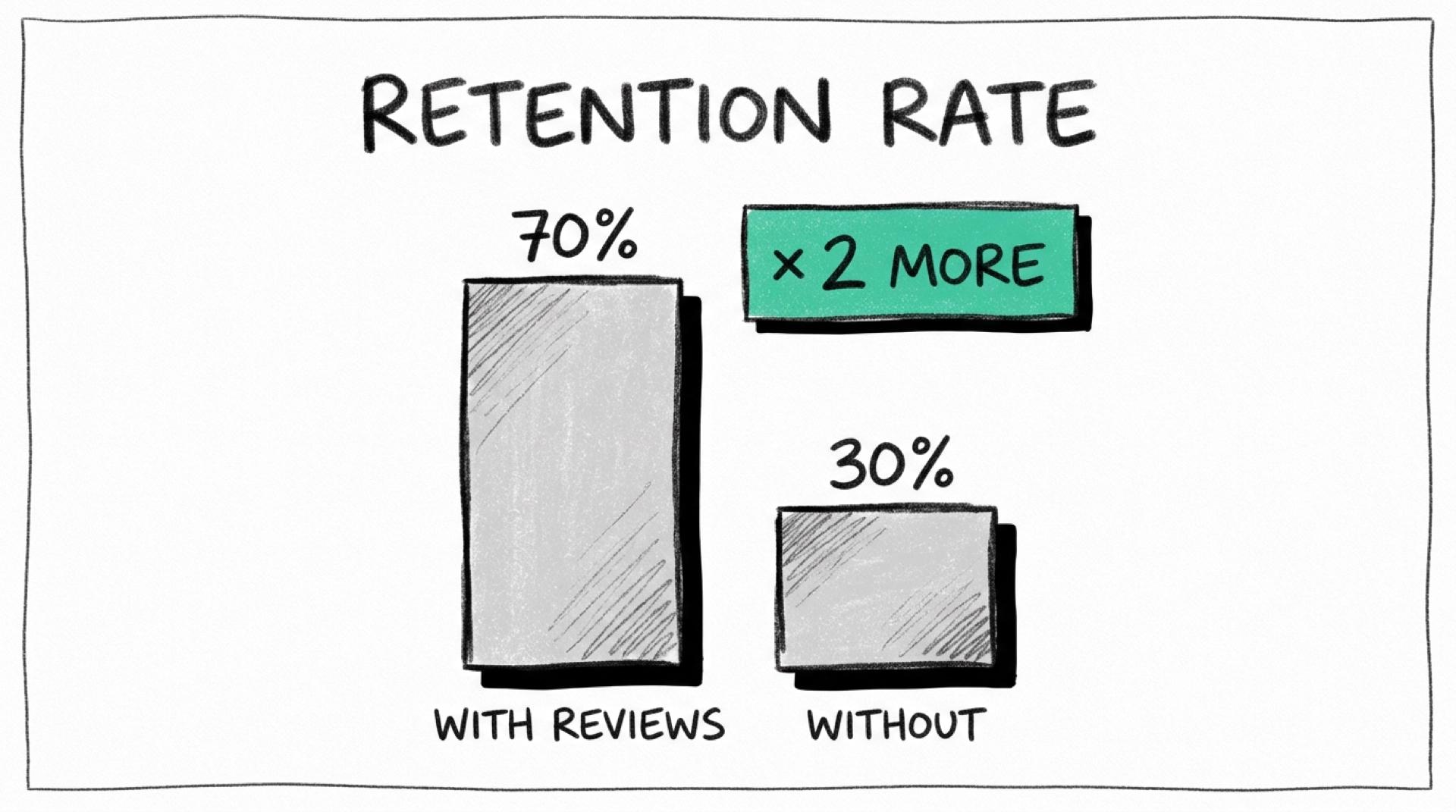
- →Customers who receive a review reply are 2× more likely to repurchase within 90 days
- →Retention costs 7× less than acquisition — each extra retention point is worth 5–7% revenue
- →Replying to 100% of reviews (positive and negative) is the most underused loyalty strategy
- →Review Collect generates ×30 reviews in 30 days with real-time NPS alerts
Customers who receive a reply to their review are twice as likely to place another order. Not a loyalty program. Not a discount. A reply. Most customer loyalty guides focus on points cards and re-engagement emails — and miss this entirely. This article walks through the full loop: from published review to repeat purchase, and how to activate it.
Customer loyalty: definition and key metrics for 2026
Customer loyalty is everything that brings a customer back to buy from you rather than a competitor. It is not the same as customer satisfaction, which measures a state at a given moment. Loyalty measures repeated behavior over time.
Three metrics actually matter:
| Metric | Acquisition | Retention |
|---|---|---|
| Average cost | 7–10× the retention cost | Baseline |
| Purchase probability | 5–20% (new customer) | 60–70% (existing customer) |
| LTV generated | 1 purchase on average before churn | 3–5 purchases over 24 months |
The oft-cited figure — retaining a customer costs 7× less than acquiring one — comes from Bain & Company research. In 2026, Google Ads cost-per-click rose 23% across e-commerce markets, making retention more profitable than ever.
Each additional retention rate point generates 5–7% revenue growth on average. Loyalty is not a secondary activity. It is a growth engine.
The direct link between customer reviews and retention
Most loyalty guides mention reviews as a reassurance tool for new buyers. What they miss: reviews first retain the customers who left them.
The mechanism is simple. When a customer takes the time to write a review, they are making a commitment. If they receive a reply, the business sends a clear signal: their opinion counts. That signal turns a one-time buyer into a repeat customer.
Customers who receive a reply to their review are twice as likely to place another order.
This is not a correlation — it is a documented mechanism across tens of thousands of transactions processed through Review Collect. The review reply creates a post-purchase connection at the precise moment the customer is still paying attention to your brand.
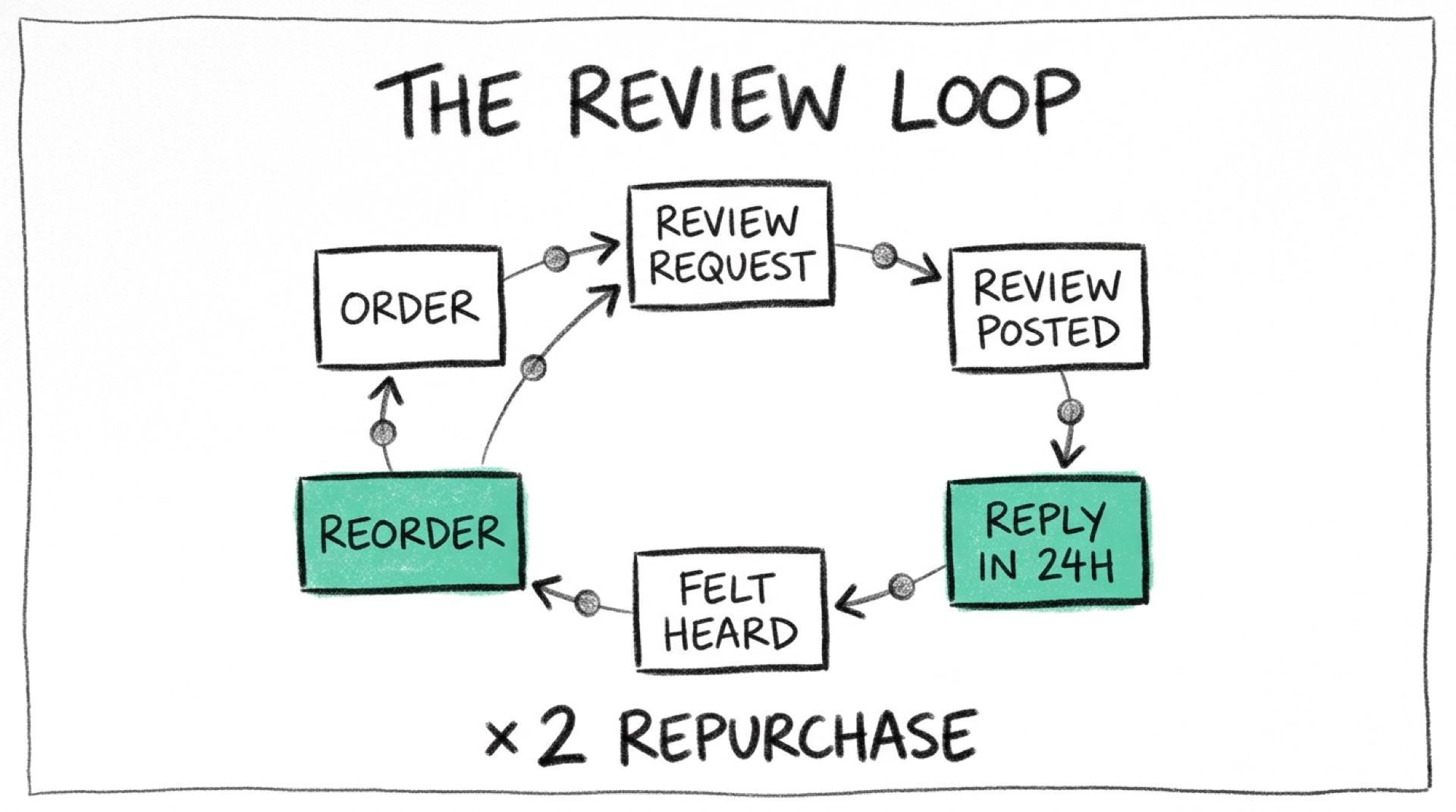
The full loop works like this:
- The customer receives their order.
- Review Collect sends a review request 48–72 hours after delivery.
- The customer leaves a review, positive or negative.
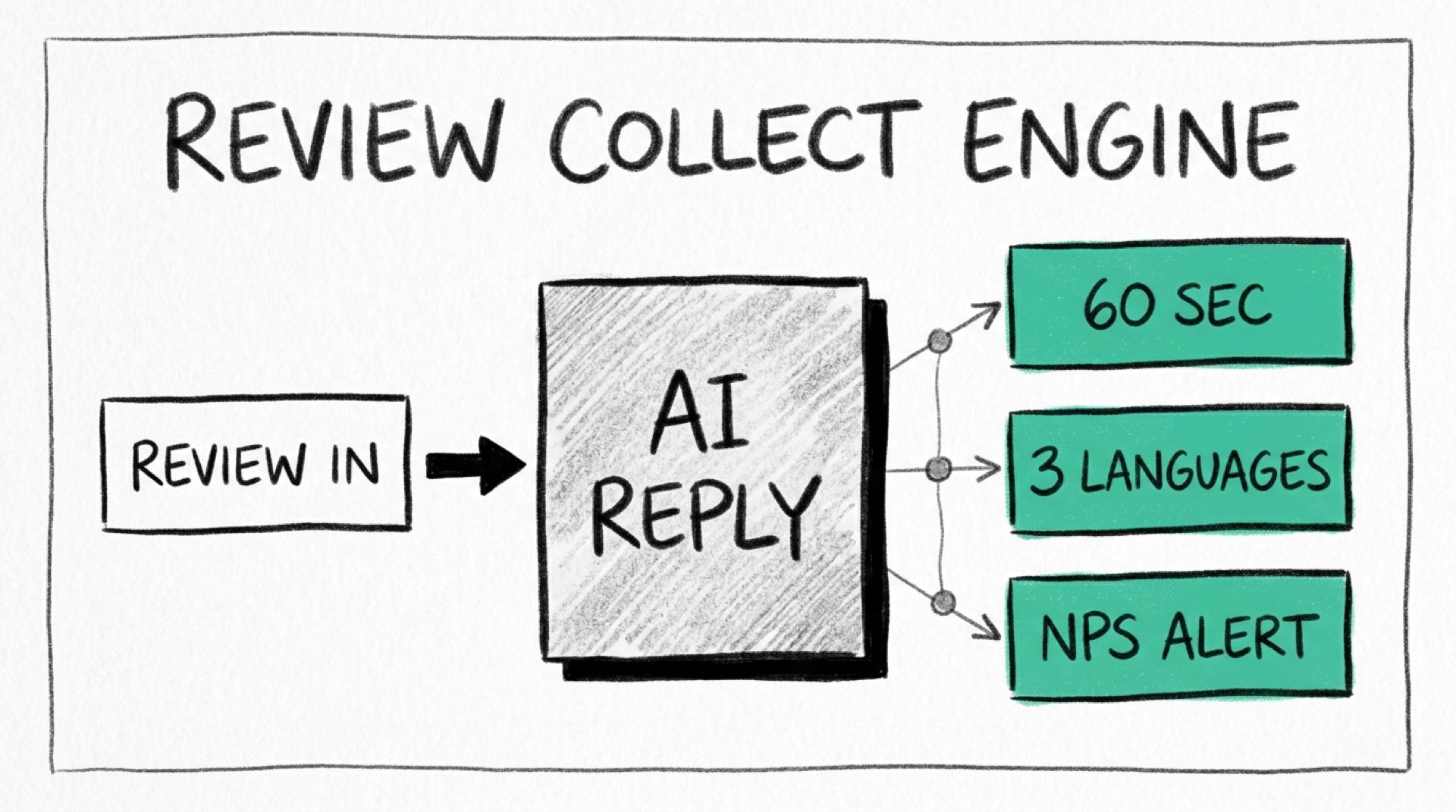
- The team replies within 24 hours — in 60 seconds with Review Collect's AI.
- The customer feels heard: their review was read and acknowledged.
- Probability of repurchase within 90 days: doubled.
This loop requires no loyalty card, no discount code, no points program. It requires one discipline: reply to every review, without exception.
4 review-based customer loyalty strategies
The four strategies below build on this mechanism. They do not replace other loyalty levers — they amplify them.
| Strategy | Signal sent to customer | Retention impact |
|---|---|---|
| Review request 48–72h post-delivery | "Your experience matters to us" | Engages at the critical moment |
| Reply to 100% of reviews | "Every review is read" | ×2 repurchase probability |
| Negative reviews resolved before next purchase | "We improve because of you" | Turns a detractor into a regular customer |
| Recent reviews on product pages | "These customers came back" | Reassurance at repurchase moment |
Strategy 1: ask for reviews at the right time
Timing matters. A review email sent 24 hours after delivery generates response rates 3× higher than one sent 7 days later. Review Collect triggers requests automatically from the Shopify, WooCommerce, or PrestaShop delivery signal — no manual action needed.
Strategy 2: reply to all reviews, including positive ones
Most teams only reply to negative reviews. That is a mistake. Replying to a five-star review with a personalized message takes 30 seconds and confirms to the customer that someone is genuinely reading their feedback. Review Collect's AI personalizes replies in 60 seconds, in 3 languages, in your brand's tone.
Strategy 3: use negative reviews before the next purchase
A three-star review mentioning a long delivery time is an opportunity. Contact the customer, explain what changed, offer a solution. 77% of dissatisfied customers who see their issue resolved are ready to buy again. Without action, that customer does not come back.
Strategy 4: display recent reviews on product pages
73% of consumers ignore reviews older than three months. Recent reviews, actively collected, are the strongest repurchase argument on your product pages. They show that the brand is active, appreciated, and responsive.
Centralise and activate your customer reviews
Review Collect collects, centralises, and replies to your reviews automatically — turning every piece of feedback into a retention driver.
- Automated collection via email, SMS, WhatsApp
- AI replies in 60 seconds, 3 languages
- Real-time NPS alerts
Customer retention rate: how to calculate and improve it
The retention rate formula:
Retention rate = ((customers at end of period - new customers) / customers at start of period) × 100
Concrete example: you started the month with 500 customers, acquired 50 new ones, and ended with 480 active customers. Retention rate: ((480 - 50) / 500) × 100 = 86%.
E-commerce benchmarks:
- No active loyalty program: 20–35% annual retention rate
- With active review collection and systematic replies: 55–70%
- With reviews, replies, NPS, and detractor alerts: 70–80%
Repurchase rate is a complementary metric: the percentage of customers who order at least twice in a given period. Rising LTV combined with a high repurchase rate signals real loyalty, not just passive retention.
For more on customer value metrics, see our glossary on customer lifetime value and retention rate.
Mistakes that kill e-commerce retention
Mistake 1: asking for a review once, without a follow-up
A single review email generates an 8–12% response rate on average. Add an SMS or WhatsApp follow-up 72 hours later and that rate climbs to 30–39%. Most platforms send only one touchpoint, leaving the majority of customers with no post-purchase interaction.
Mistake 2: only replying to negative reviews
This approach leaves 80% of reviews unanswered. It sends a negative signal to satisfied customers: their positive review was not read. Their emotional connection to the brand stays low, and their repurchase probability does not improve.
Mistake 3: leaving reviews older than 3 months on display
The recency effect is well documented: consumers trust 5 reviews from last week more than 50 reviews from last year. Passive collection lets review freshness decay. More on this in our article on the recency effect in reviews.
Loyalty also hinges on how fresh your reviews are: understand the recency effect that shapes purchase decisions, and tie it back to your overall customer satisfaction management to close the loop.
How Review Collect turns your reviews into a retention engine
Review-based retention depends on three conditions: volume, speed, and consistency. Without volume, the loop never starts. Without response speed, the attention signal arrives too late. Without consistency, customers left without replies feel treated differently from those who receive one.
Review Collect solves all three simultaneously.
Volume: the automated collection protocol (email, SMS, WhatsApp) generates ×30 more reviews in 30 days, with a 39% response rate — 3 to 5× the market average.
Speed: AI-powered replies personalize and publish a response in 60 seconds, in 3 languages, in your brand's tone. No review goes unanswered, including at night and on weekends.
Consistency: NPS alerts detect at-risk customers (NPS < 6) before they post a negative review or switch to a competitor. The CX team is notified in real time to act within the 72-hour window.
Full feature details on our review responses page: AI personalization, multi-platform management, NPS alerts.
Frequently Asked Questions
Analyze with AI
Ask your questions about "Customer loyalty: why your reviews drive repeat purchases (×2)" with your preferred AI

Growth Hacker